Design and Construction Partners Consider Design Assist as High-Value Service
Collaboration between the design and construction community is not new. The uptick in bringing specialty contractors to the table earlier in the design process is driven by two factors:
- Increased demand from owners for cost and schedule efficiency
- As materials and systems have become more complex, architects and CM’s want to mitigate risk and therefore see the value of tapping into the technical expertise of specialty contractors
The American Institute of Architects (AIA) and the American Institute of Steel Construction (AISC) recognized there was a gray area and potential for confusion around expectations for various collaboration techniques that were evolving. Things they saw as not optimum for the industry.
In 2020, the organizations co-wrote the paper “Design Collaboration on Construction. Part 1: Delegated Design, Design Assist, and Informal Involvement” to crystallize definitions, clarify expectations, define roles and responsibilities and establish guidelines that can be adopted throughout the design and construction industry.
The paper states that, “If not properly planned, ad hoc or late occurring contractor involvement can have significant impacts on the timely development or revision of the design and the resources budgeted by the design team or others.”
This is how the AIA and AISC define two collaborative techniques:
“Informal Involvement” is an informal exchange of information between a design professional and contractor in which there is typically no agreement, no compensation, and no expectation that the contractor will guarantee or be responsible for the accuracy of the information provided.
“Design Assist” describes a form of collaboration where a contractor provides information to assist a design professional’s design, typically before pricing for the work has been agreed upon or before the work has been awarded. The design professional and contractor typically have separate written contracts with the owner that describe the scope of the contractor’s design assist services and the extent to which the design professional can rely on the contractor’s information. The contractor may incur contractual liability for the information it provides, but the design professional is responsible for incorporating the contractor’s information into its design and maintains professional responsibility for the overall design.
Dant Clayton Has Honed Its Ability to Collaborate on Design Assist Projects
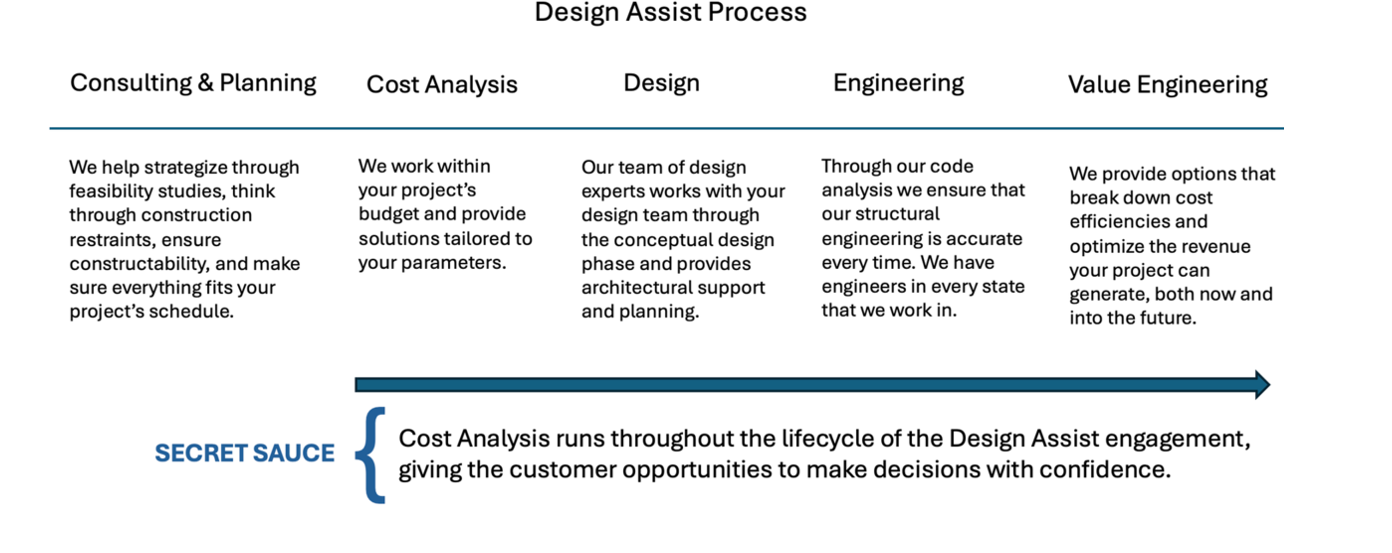
So, what’s Dant Clayton’s “secret sauce” to improving outcomes for customers?
Adam Zahn, PE and Engineering Manager at Dant Clayton, acknowledges that when the company’s designers get involved at the conceptual phase, the estimators and project managers are able develop a cost analysis sooner. Then the cost analysis continues to get refined throughout the balance of the design assist process as the design takes shape. This gives the owner, architect, and CM confidence to make key decisions.

“There’s been an increase in formal Design Assist agreements because the owner and construction manager want confidence in their decisions before going into procurement that the project can meet budget. The stakes are higher today than ever."